Moshi, Tanzania
 +255 742 596 234
 generoustours@gmail.com





Stone Town Walking Tour Zanzibar - Overview
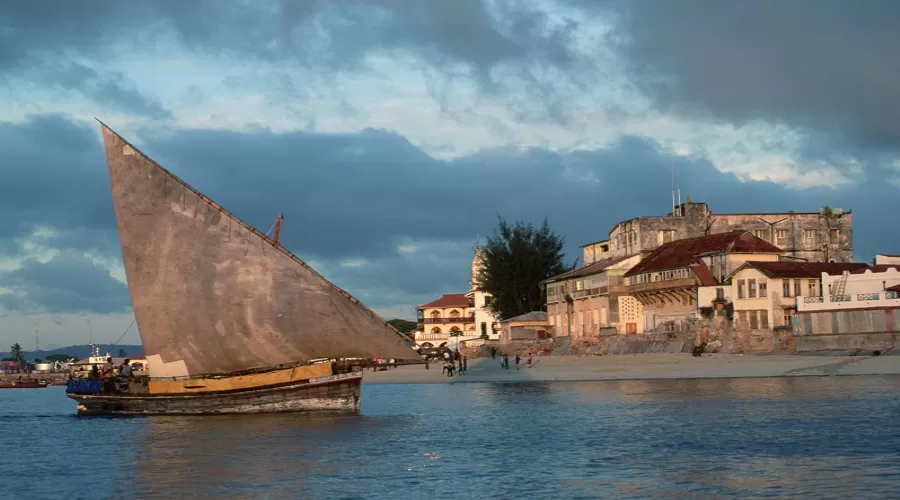
Stone Town is one of the most extraordinary urban environments in Africa — a living, breathing UNESCO World Heritage Site where Arab, Persian, Indian, African, and European civilisations layered themselves one on top of another over a thousand years of trade, conquest, and cultural exchange. Its narrow coral-stone alleyways, intricately carved wooden doors, ancient mosques and churches standing within sight of each other, and the constant sensory richness of spice markets, fish bazaars, and coffee vendors make it a place that cannot be absorbed from a hotel window. It requires walking, pausing, asking questions, and a guide who knows its layers.
Our Stone Town Walking Tour takes you through the medina's most significant historical sites and living cultural spaces with a local expert guide who was born and raised in the town's alleyways. You visit the Old Arab Fort, the Palace Museum, the infamous former Slave Market and Anglican Cathedral built on its exact site, the Persian Hammam baths, the spice and fresh produce markets, and the distinctive carved door facades that make Stone Town's streetscapes one of the most photographed architectural environments in East Africa.
The tour is available as a morning half-day, an afternoon half-day, or a full-day experience combining the walking tour with a sunset dhow cruise or spice farm visit. It suits first-time Zanzibar visitors who want historical and cultural context for the island they are exploring, and returning visitors who want to go deeper into the town's extraordinary layered history than a self-guided walk can deliver. Stone Town is a place that reveals itself slowly and rewards the curious — this tour ensures you see all of it.
Stone Town Walking Tour Zanzibar - Highlights
Stone Town Walking Tour Zanzibar - Short Itinerary
- Tour Day: Stone Town Full Walking Tour — Historical Medina to Waterfront
Stone Town Walking Tour Zanzibar - Detailed Day-by-Day Itinerary
Stone Town Full Walking Tour — Historical Medina to Waterfront
Meeting Point — Your Stone Town Hotel or Agreed Location. Your guide meets you at your hotel entrance or at a central Stone Town meeting point at the agreed departure time — morning departures at 8:30 AM and afternoon departures at 2:30 PM are both available, with morning recommended for cooler temperatures and better market activity. Your guide opens with a brief historical overview of Stone Town — the Shirazi Persians who established the first permanent settlement, the Omani Arab sultanate that built the stone city you see today, the slave trade that made Zanzibar the most important trading post on the East African coast, and the British colonial period that ended with Zanzibar's independence in 1963. Three minutes of context that makes everything you are about to see coherent and connected.
Stop 1 — The Old Arab Fort (Ngome Kongwe). The walking tour begins at Forodhani Gardens on the waterfront, where the Indian Ocean spreads to the horizon and the Old Arab Fort rises on your left — a massive coral-stone fortification built by the Omani Arabs between 1698 and 1701 on the site of a Portuguese chapel, itself built on the ruins of an earlier Shirazi structure. Three civilisations and three centuries of history in a single building. Your guide explains the fort's construction, its role in the Omani consolidation of Zanzibar, and its current use as a cultural centre and open-air amphitheatre. The view from the fort's ramparts over the dhow harbour and the Indian Ocean is one of Stone Town's finest.
Stop 2 — House of Wonders (Beit al-Ajaib). Adjacent to the fort stands the House of Wonders — Zanzibar's largest and most imposing historical building, built in 1883 by Sultan Barghash as his ceremonial palace and the first building in East Africa to have electric lights and an elevator. Its four-storey facade of carved wooden balconies, ornate ironwork, and coral-stone columns overlooks the waterfront in a statement of Omani imperial confidence that still commands the Stone Town skyline. Your guide covers the building's extraordinary history — its role as the sultan's reception hall, its renovation as a museum of Swahili and Ocean civilisation, and the tragic partial collapse of its facade that has made restoration a current priority.
Stop 3 — The Palace Museum (Beit al-Sahel). A short walk from the House of Wonders, the Palace Museum was the official residence of the Zanzibar sultans from 1880 until the 1964 revolution. Its rooms preserve the furniture, clothing, royal portraits, and personal effects of the sultans who ruled the Zanzibar Sultanate at the height of its power — a period when Zanzibar controlled the entire East African coast from Mogadishu to Mozambique and was the world's largest producer of cloves. The museum's rooftop terrace delivers a panoramic view of the Stone Town roofscape — coral-stone walls, terracotta tiles, and the minaret of the Friday Mosque rising above the medina.
Stop 4 — The Carved Doors of Stone Town. Your guide leads you into the heart of the medina — the narrow, maze-like alleyways of coral-stone buildings where the famous carved wooden doors of Stone Town line every street. Over 500 individual carved doors survive in the medina — each one unique, each one a statement of the owner's wealth, religion, and cultural identity. The oldest doors are Indian in style, with brass studs originally designed to repel war elephants. The Arab doors are characterised by intricate geometric carving and Quranic inscriptions. Your guide identifies and interprets the finest examples — the Mambo Msiige door, the Old Dispensary facade, and the remarkable carved frames of the former merchant houses of the Shangani district — while navigating the alleyways with the easy fluency of someone who grew up running through them.
Stop 5 — Freddie Mercury's Birthplace — 45 Kenyatta Road. Farrokh Bulsara — known to the world as Freddie Mercury of Queen — was born in Stone Town on 5 September 1946, the son of a Parsi Indian court official. The building at 45 Kenyatta Road where he spent his early childhood is a modest coral-stone house in the medina, now marked and increasingly celebrated by international visitors who make the pilgrimage specifically for this stop. Your guide tells the story of Mercury's Zanzibar childhood, his family's Zoroastrian Parsi background, and the extraordinary journey from the alleyways of Stone Town to the stages of Live Aid. A genuinely moving stop for music lovers and a fascinating cultural footnote for everyone else.
Stop 6 — Hamamni Persian Baths. Built in the 1870s by Sultan Barghash for the use of the public, the Hamamni Persian Baths are among the oldest surviving Persian-style hammam baths in East Africa — a complex of vaulted coral-stone chambers, hot and cold bathing rooms, and elaborate hydraulic systems that delivered heated water to the sultan's subjects. The baths fell out of use in the early 20th century but survive in remarkable condition as a historical monument. Your guide explains the social function of the hammam in Zanzibari daily life and the Persian architectural techniques that distinguish this building from the predominantly Arab stone architecture surrounding it.
Stop 7 — Slave Market & Christ Church Cathedral. The most historically significant and emotionally powerful stop on the tour. The Anglican Christ Church Cathedral was built in 1873 by the Universities' Mission to Central Africa on the exact site of Zanzibar's central slave market — the largest slave trading post in East Africa, through which an estimated 50,000 enslaved people passed annually at its peak in the 1860s. The altar is positioned over the precise spot where the whipping post stood. Beneath the cathedral, the original slave holding chambers survive intact — small, lightless, airless coral-stone cells where enslaved people were held before sale. Your guide covers the history of the East African slave trade, Zanzibar's role as its commercial centre, and the British anti-slavery campaign led by David Livingstone that eventually forced the Zanzibar Sultan to close the market in 1873 — the same year the cathedral's foundation stone was laid. This stop requires time, attention, and silence. Your guide gives it all three.
Stop 8 — Darajani Market — Spices, Fish & Street Food. The final stop brings the tour back to the living, sensory present. Darajani Market is Stone Town's central covered market — a dense, fragrant, crowded world of spice stalls, fresh fish counters, tropical fruit pyramids, and street food vendors cooking Zanzibari specialities over charcoal fires. Your guide introduces you to the spices that made Zanzibar the Spice Island — cloves, cardamom, cinnamon, black pepper, and vanilla — and navigates the market's different sections with the ease of a daily visitor. The smell of fresh cloves, the sound of the fish auction, and the extraordinary visual density of the market make this the perfect sensory finale to a tour that began on the calm waterfront of Forodhani Gardens three hours earlier.
Tour End — Return to Your Hotel. Your guide walks you back to your hotel or to a central Stone Town landmark of your choosing. Recommendations for lunch, sunset rooftop bars, and evening dining in Stone Town are offered — your guide's local knowledge extends well beyond the tour itself. Stone Town is now a place you understand as well as see — its layers of history, its extraordinary cultural complexity, and its remarkable survival as a living community inside a UNESCO World Heritage Site all connected into a coherent, memorable whole.
Stone Town Walking Tour Zanzibar - Accommodation Standard
Stone Town Walking Tour Zanzibar - Inclusion & Exclusion
What's Included?
What's Excluded?
Why Book with Generous African Tours?
What's Best Time to Visit Stone Town Walking Tour Zanzibar?
Zanzibar has a tropical climate. The best time to visit is during the cool, dry months from June to October, or the hot, dry season in January and February.
Hot
Hot
Wet
Wet
Wet
Excellent
Excellent
Excellent
Excellent
Good
Quiet
Festive
Frequently Asked Questions
What is the best time of year to visit Zanzibar?
How do I get to Zanzibar from mainland Tanzania?
What clothing is appropriate in Zanzibar?
Stone Town Walking Tour Zanzibar | UNESCO Heritage City Guide | Generous African Tours : Tour Gallery